A Darker Perfume Photo Is a Reason to Check, Not an Expiry Test
Compare the same bottle under consistent conditions before turning a color difference into a chemical conclusion.
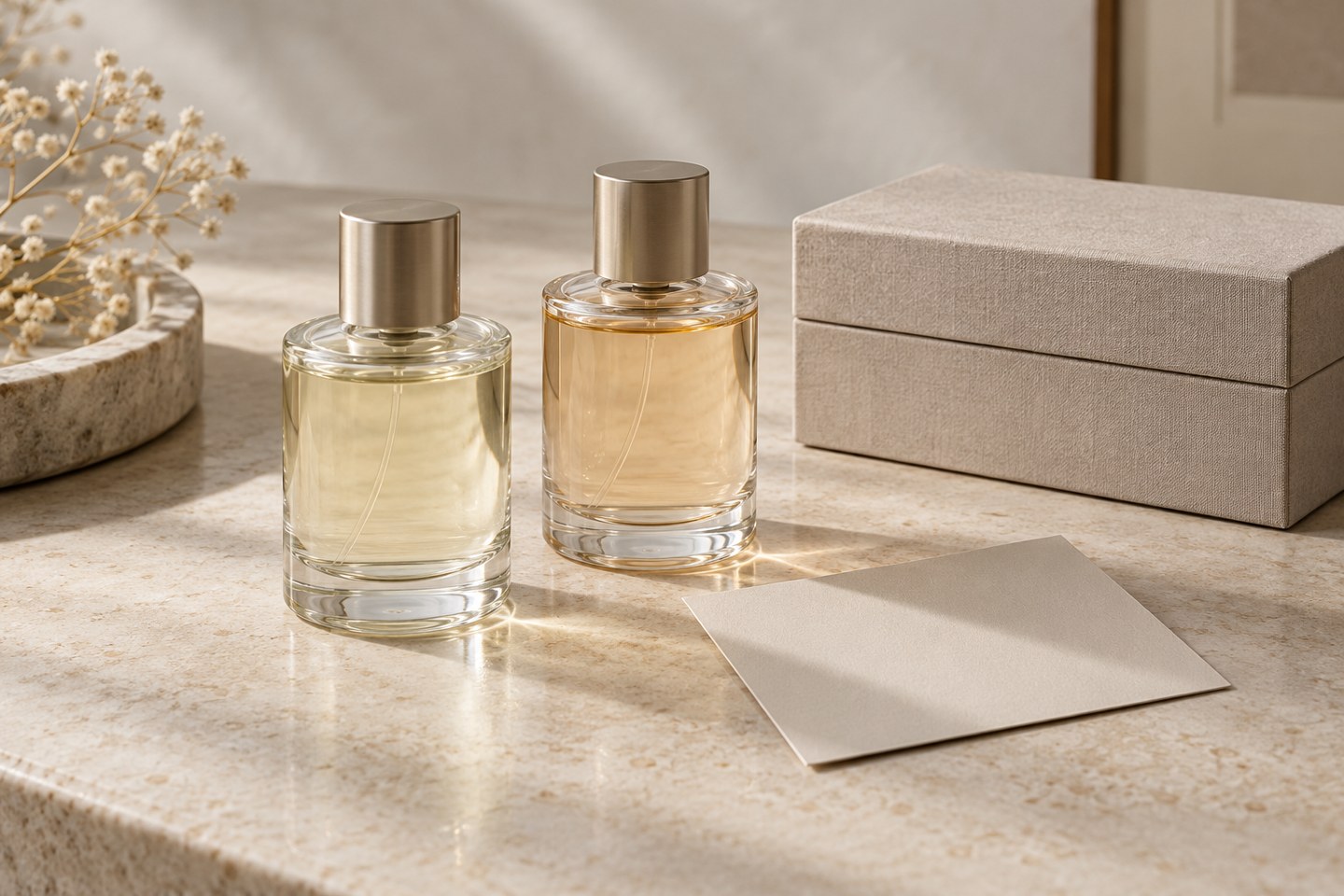
You notice that a perfume looks more amber than it did in an old phone photo. That is worth recording. It is not enough, on its own, to decide what has happened inside the bottle.
Separate the liquid from the photograph
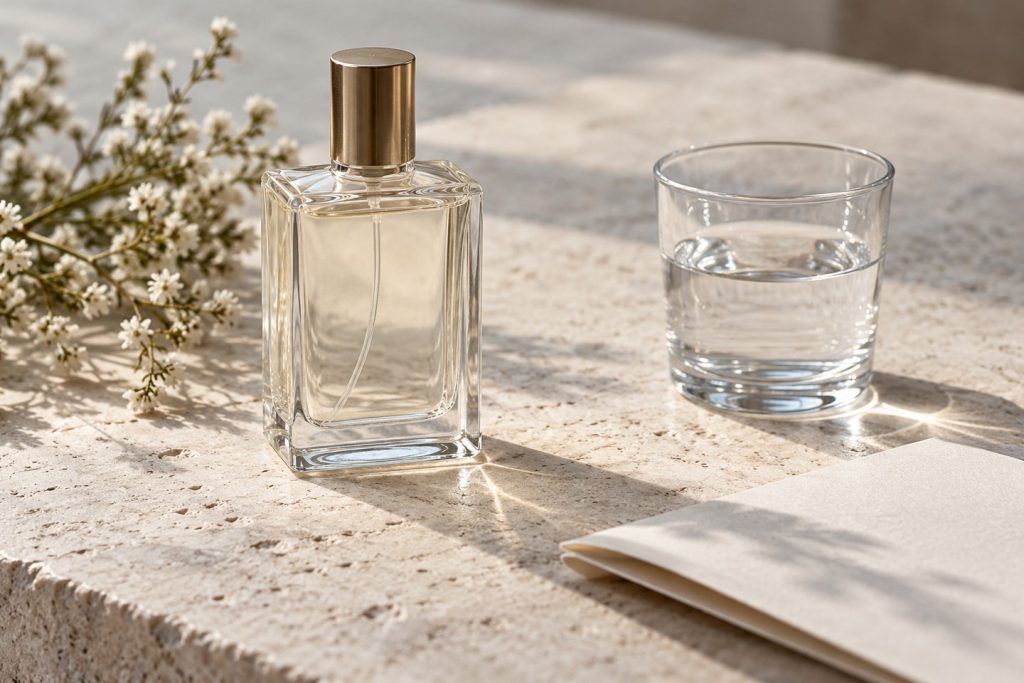
Start with the comparison itself. Was the earlier picture taken beside a window, through tinted glass, or against a white wall? A different background and lighting setup can make the comparison hard to interpret. Photograph the same bottle in the same place, with a plain background, without opening it or changing the liquid.
Keep the observation modest: “looks darker in today’s picture” is more accurate than “has oxidized by a particular amount.” A photograph is not a chemical assay. It cannot identify a reaction product or establish whether a finished perfume remains suitable for use.
Color is also not necessarily an accidental feature. The current Dior US Miss Dior Holiday 2026 product page lists named colorants in its ingredient declaration. That is one concrete product example, not evidence that every perfume is colored or that a pale perfume is more natural. Read the declaration for the actual version you own.
Add the history you can verify
The Perfume Society advises keeping fragrance away from light and heat. It also describes changes in appearance and smell as possible warning signs of deterioration. Its care guidance is useful context; it does not turn a single color difference into a reliable expiry clock for every formulation.
Write down where the bottle has been kept, whether the closure seems damaged, and whether the change is sudden or gradual. Use dates when you know them. Do not invent a storage history to make the explanation feel complete. Two bottles with similar names may have different ages, packaging or versions, so they are a poor substitute for a record of your own bottle.
Give uncertainty somewhere to go
If something seems wrong, set the bottle aside and ask the manufacturer or seller about that specific product. Include its exact name, any printed reference information and a clear description of the concern. Follow its own care and use instructions; a photograph cannot give a safety guarantee.
Do not add water, alcohol or another fragrance to “correct” the shade. That creates a different mixture and erases the comparison you were trying to understand. Nor is spraying a questionable product onto skin a sensible way to prove that it is fine.
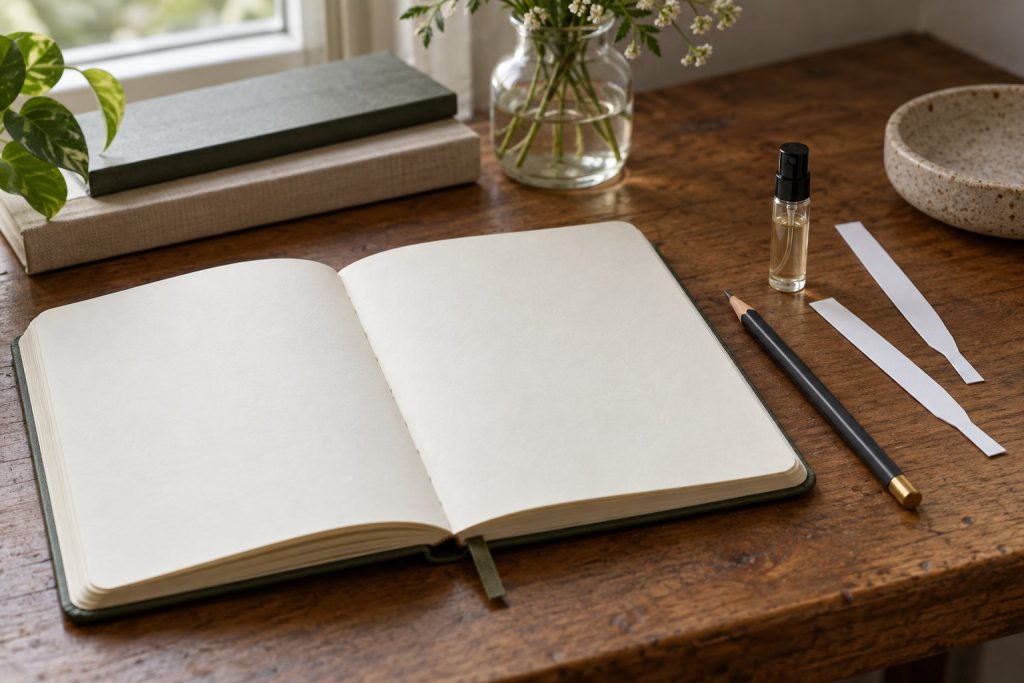
A useful note can be short: date, appearance, storage place, concern and next action. It preserves evidence without pretending that a home observation has become a laboratory result.
Sources and scope
- The Perfume Society: fragrance care FAQ. Standing educational guidance; no new experiment or universal expiry date asserted. Accessed October 19, 2026.
- Dior US: Miss Dior Eau de Parfum Holiday Gift 2026 Edition. Current US Holiday 2026 listing; exact launch day not established. Accessed October 19, 2026.
Illustration generated with AI; the bottles shown are generic.