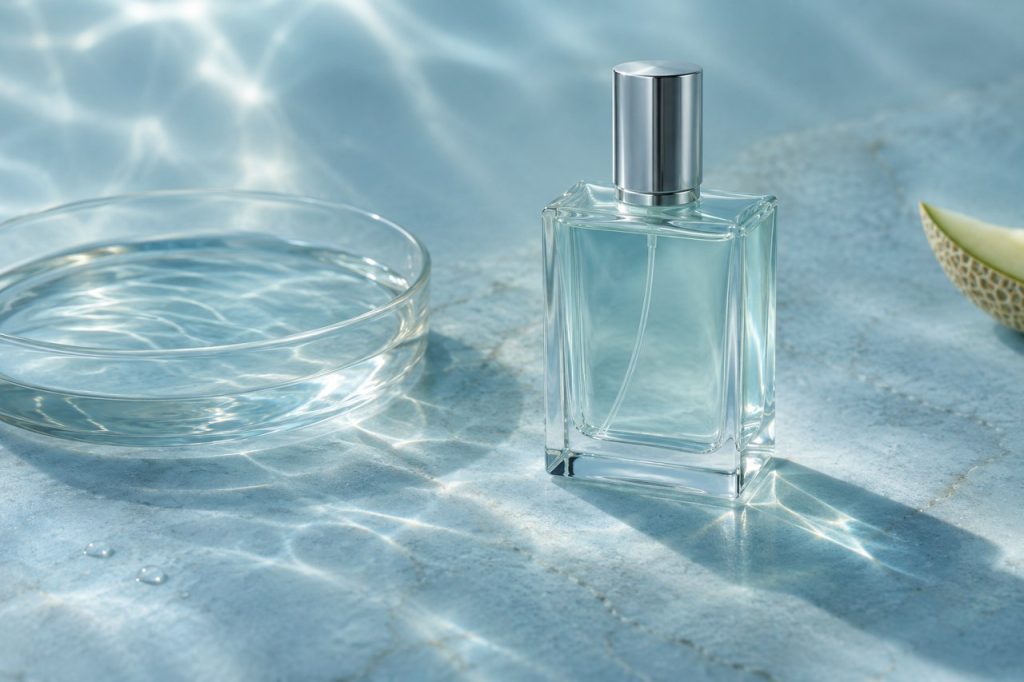
An Aquatic Accord Does Not Mean the Bottle Contains Seawater
A perfume described as watery can suggest a beach, a cool shower or a slice of melon. Those are useful images for choosing a scent. They are much…
Read the storyUnderstand scent notes, fragrance labels, longevity, projection and sillage without turning choosing perfume into homework.
A perfume described as watery can suggest a beach, a cool shower or a slice of melon. Those are useful images for choosing a scent. They are much…
Read the story
A long ingredient name can look like a complicated version of a familiar one. Phenoxyethanol is a useful example. Seeing “ethanol” inside the word does not make the…
Read the story
A perfume label lists geraniol, while the shop description talks about rose. It is tempting to join those two clues into a simple story about rose petals in…
Read the story
A label says citral. The reference page you opened talks about geranial and neral. When you are comparing a perfume label with an ingredient reference, the different names…
Read the story
An ingredient can appear on the back of two bottles whose scent descriptions have little in common. Hydroxycitronellal is one example. Its name gives you something specific to…
Read the story
A solid perfume can sit beside a spray with the same name on the shelf. The package format gives you a useful clue about how to use it.…
Read the story
If a label lists benzyl benzoate, copy those two words before looking them up.
Read the story
Read the role of an antioxidant without turning an ingredient name into a scent note or an expiry promise.
Read the story
An oil base can explain the format while the fragrance description helps you decide what to sample.
Read the story
Before borrowing a longevity number, check what was tested and on which surface.
Read the story