An Aquatic Accord Does Not Mean the Bottle Contains Seawater
A perfume described as watery can suggest a beach, a cool shower or a slice of melon. Those are useful images for choosing a scent. They are much less useful as a shopping list of what went into the bottle.
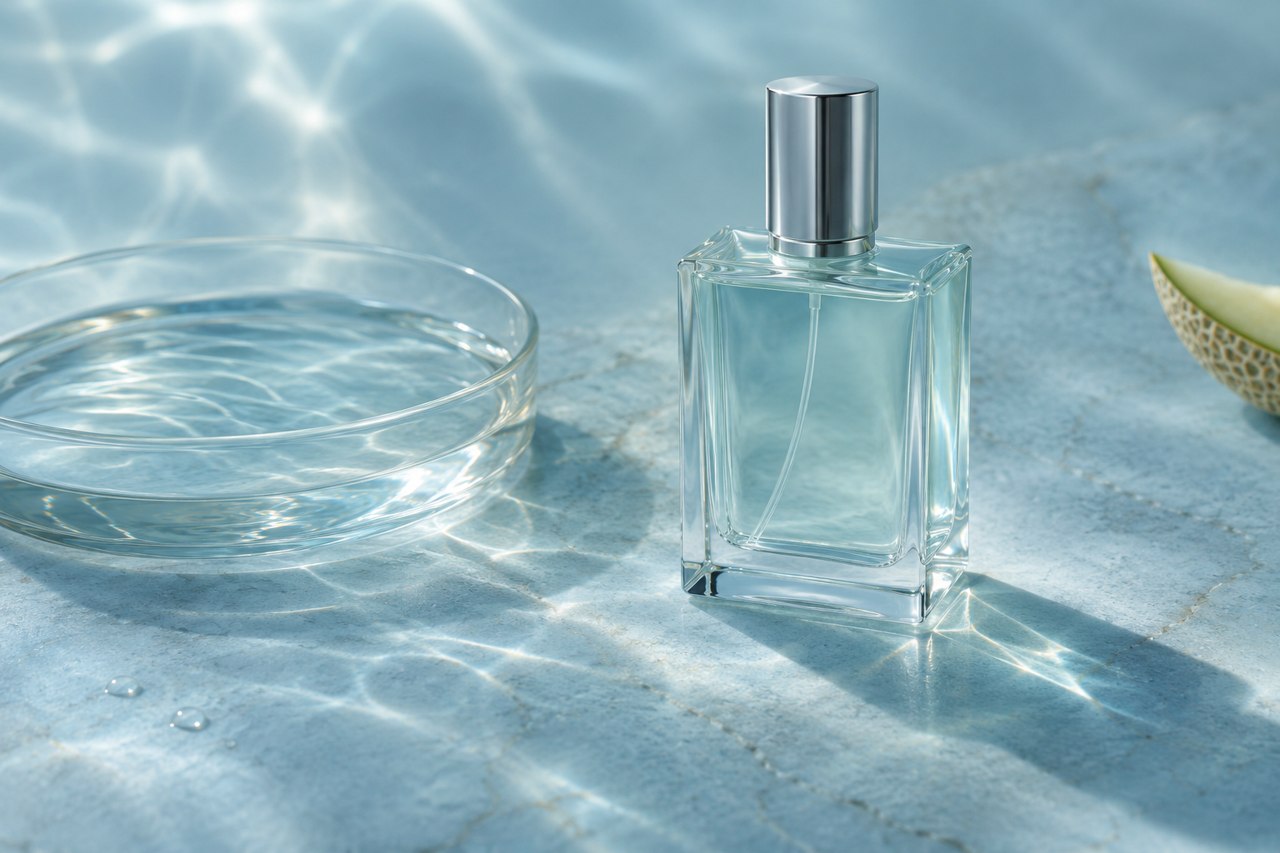
A perfume described as watery can suggest a beach, a cool shower or a slice of melon. Those are useful images for choosing a scent. They are much less useful as a shopping list of what went into the bottle.
Start with the impression
Treat an aquatic description as a question about character: does the perfume seem airy, salty, fruity, clean or some combination of those things? Two descriptions can both mention water while pointing toward quite different experiences. A transparent floral and a sharp marine accord need not be close substitutes.
Write down the part of the description that interests you. If it is the lightness, look for that quality rather than buying every fragrance with a sea-themed name. If it is a melon-like effect, say so. More precise language makes the next comparison easier.
A material has a separate identity
For a concrete example, Synerzine's Calone specification identifies the aroma material also called watermelon ketone, with CAS number 28940-11-6. Its odor assessment is melon-like. The sheet describes a solid material, not seawater or melon juice. This is a supplier specification, not a new discovery or an analysis of a finished perfume; it was checked on November 23, 2026.
That distinction helps with many scent names. A word can describe the picture a composition creates without naming a literal extract of the object in that picture. It also does not tell you which supplier's material, if any, was used in a particular perfume.
Keep the note list and ingredient list apart
A brand's aquatic note description cannot establish that Calone is present. Nor can a supplier sheet establish its concentration, its companions or the behavior of an undisclosed formula. Ask the brand for published product information rather than working backward from a poetic description.
For a practical comparison, choose two finished fragrances whose descriptions make different promises: one more fruity, one more mineral or floral. Record what you actually notice in each, using its own directions for trying it. There is no need to handle concentrated raw materials to make that comparison.
Fragrentis publishes this journal and operates the linked store. Compare the publisher’s aquatic and other scent descriptions.
The useful outcome is a better preference sentence: “I want a light floral with a watery impression, without a pronounced melon effect.” That gives a shop something concrete to work with while leaving the formula question where it belongs.
Illustration generated with AI; the bottles shown are generic.