Put the Closure on Your Perfume Care Checklist
A cap, a spray mechanism and a good storage position do different jobs. Check the whole bottle before putting it away.
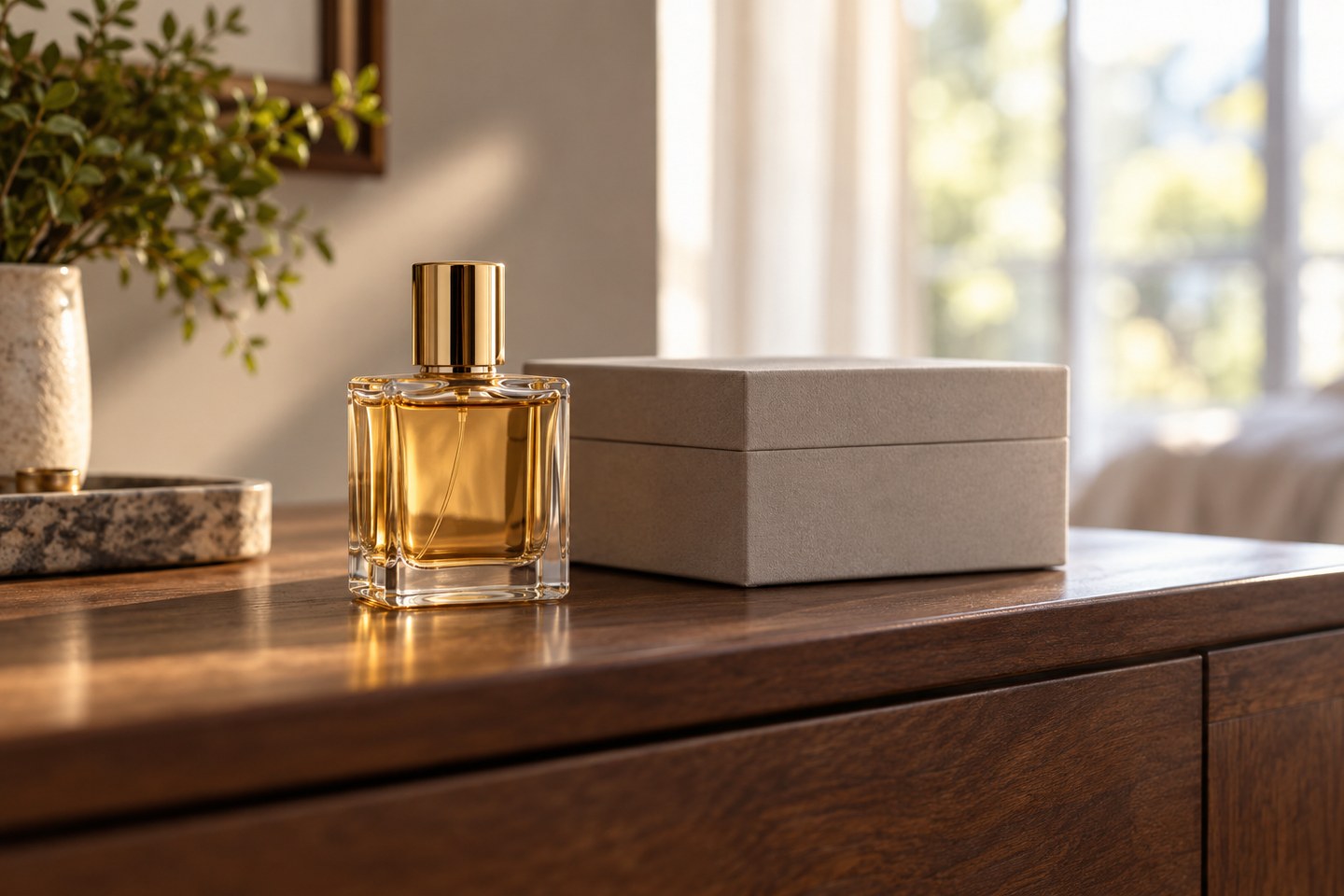
You finish using a perfume, replace the decorative cap and put it on the shelf. That small routine is a useful moment to look at the bottle itself. A handsome cap is only one part of the package; the closure and dispensing mechanism also deserve attention.
Start with the manufacturer’s instruction
CHANEL’s care guidance recommends keeping fragrance away from heat and light and keeping the bottle tightly sealed. That is a practical manufacturer recommendation, not a promise that every fragrance has the same shelf life. It supports a simple question: have you stored this particular bottle in the way its maker intended?
An outer cap and a liquid seal are not necessarily the same thing. A spray bottle can have a decorative cover above its pump, while a splash format may have a stopper or screw closure that directly closes the opening. Use the instructions for the actual package rather than forcing the same routine onto every design.
Notice a problem before putting it back
Look for a loose closure, liquid on the outside or a dispenser that no longer works normally. These observations are reasons to ask the seller for advice. They are not enough to diagnose a chemical change, decide that a perfume is counterfeit or calculate its remaining life.
Do not try to tighten a crimped spray assembly with tools or prise it off because a cap seems loose. Likewise, avoid improvising a replacement stopper or transferring the liquid into an unsuitable container. A repair can become a spill, and a different container creates a new packaging question.
Give the bottle a repeatable home
Choose a shaded, stable position where the bottle can stand securely and you can reach it without moving several other objects. An original box can help you keep the item and its identifying information together; it is not permission to leave it beside a source of heat.
For a collection, record the date you first noticed a leak or damaged mechanism and take a clear photograph. Describe the observation rather than writing “oxidized” when you have no evidence for that conclusion. Keep any purchase details that might help the seller identify the exact format.
This check should take seconds. The aim is a consistent storage habit, not daily dismantling or repeated spraying to see whether something has gone wrong. When buying a replacement, consider the package you can comfortably use and close, alongside the scent you actually want.
Source and editorial note
CHANEL fragrance and beauty FAQ. Standing manufacturer care guidance; checked October 30, 2026. This is editorial guidance, not a personal wear test. Illustration generated with AI; the bottles shown are generic. The image does not document brand merchandise, a laboratory result or an actual supplier transaction.
Illustration generated with AI; the bottles shown are generic.