EDT and EDP: Read the Label, Then Compare the Actual Scent
Concentration labels help identify a fragrance version. They do not choose your favorite for you. Here is a useful way to compare two bottles.
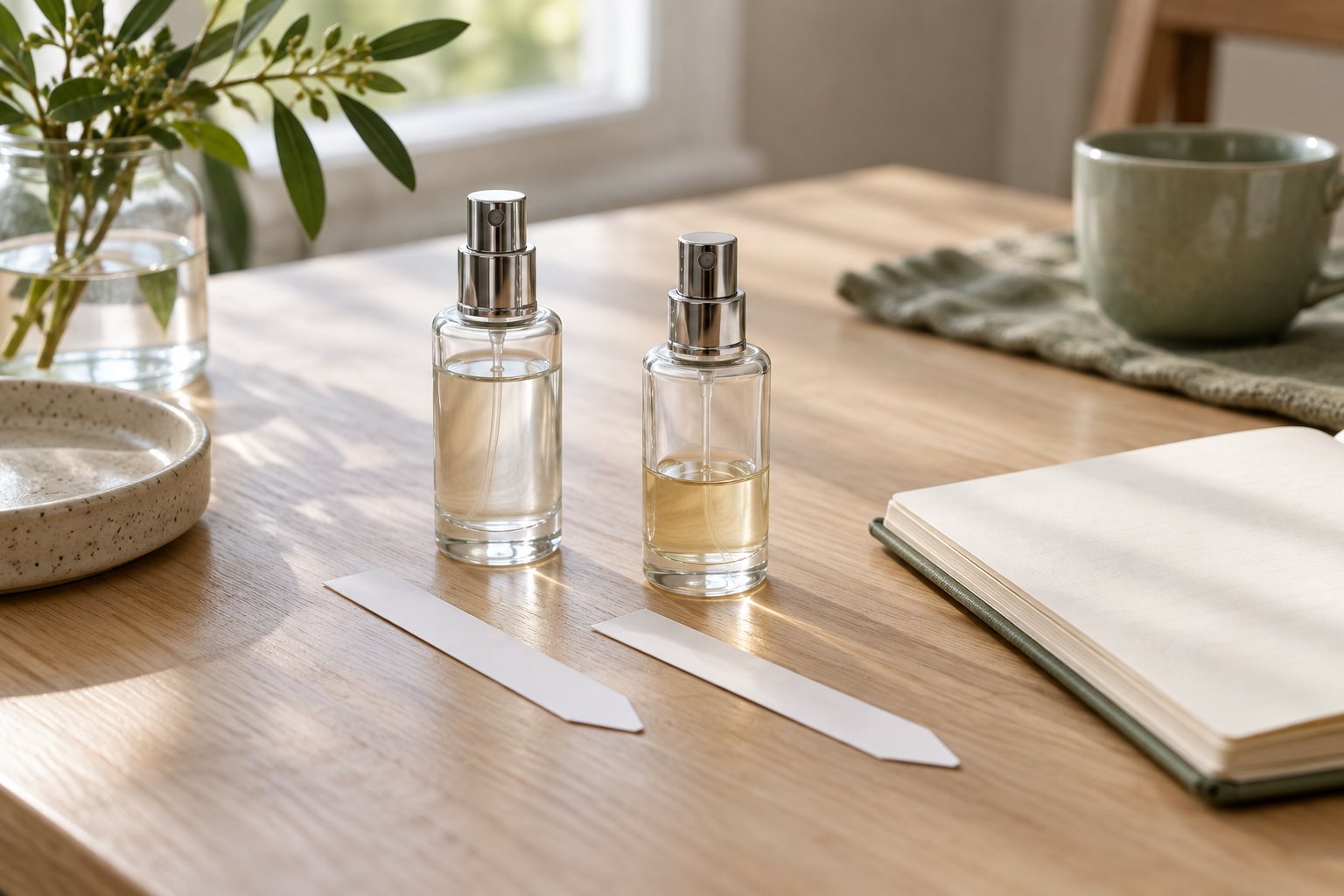
You find a fragrance you like, then notice two versions beside each other: eau de toilette and eau de parfum. Choosing the EDP can feel like buying the more complete version. Choosing the EDT can feel like a compromise. Before making that decision, put the two names on separate scent strips and treat them as two candidates.
What the words tell you
EDT stands for eau de toilette; EDP stands for eau de parfum. These are useful concentration labels, but a label is only part of a fragrance description. In its official fragrance FAQ, CHANEL describes its parfum, EDP and EDT as expressions that share an identity while differing in concentration and intensity. That is a description of the house’s own fragrances, not a universal formula for every bottle on the shelf.
If you want an exact percentage for a particular product, look for information from its maker. Avoid filling in a number from a generic chart when the product itself does not state one. Nor should a concentration label be your only evidence for how many hours a fragrance will last or how far it will reach.
Start with the version name
Write down the full name of each candidate, including EDT or EDP. A sample marked only with the fragrance name can leave you comparing the wrong version later. Check whether the listing describes the same version you actually tried, especially when a range also includes an Intense, Elixir or Parfum.
Then read the descriptions separately. Notice which materials or impressions the maker emphasizes. Use those differences as questions to explore, rather than proof that one will be sweeter, softer or more suitable for you.
Compare one question at a time
For a first comparison, label two blotters and keep them apart. Ask a narrow question: which opening do you enjoy more? Return to them later and ask whether that preference has changed. You do not need to turn every observation into an expert note pyramid. “Prefer this one once the sharp opening settles” is useful information.
If both remain interesting, try each on a separate ordinary day, following the product’s directions. Keep the setting reasonably similar. Comparing one during an outdoor afternoon and the other in a crowded evening room makes it harder to separate the fragrance from the occasion.
Make the decision in your own terms
A richer impression might suit your taste; a lighter-feeling one might be exactly what you want. Neither answer needs defending. Keep three short notes: whether you enjoy wearing it, whether its presence fits your usual surroundings, and whether you still want it when the novelty has passed.
When prices differ, compare the actual bottle size and version being sold. Spend more only when you prefer what that bottle offers. The letters on the label are a useful way to identify your choice, but the choice still belongs to you.
Illustration generated with AI; the bottles shown are generic.
Related reading
Fragrentis publishes this journal and operates the linked store. Explore Fragrentis fragrances and compare their listed notes and formats.